Demand-controlled lighting for smarter buildings
The lighting adapts to occupancy, daylight and how the room is used – automatically, while allowing users to make adjustments.
The lighting uses the same occupancy data, network loop and supervisory system as the indoor climate control. This reduces the number of separate systems and makes the room functions easier to coordinate and modify.

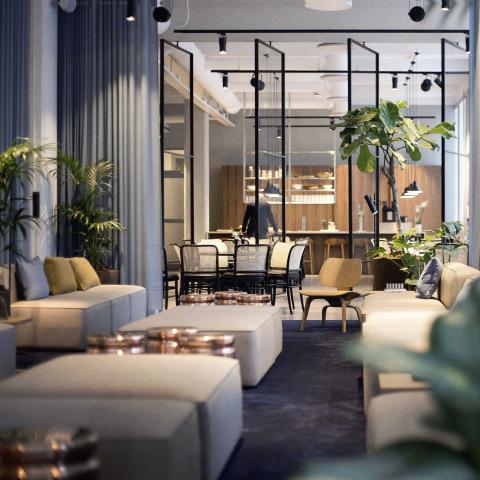
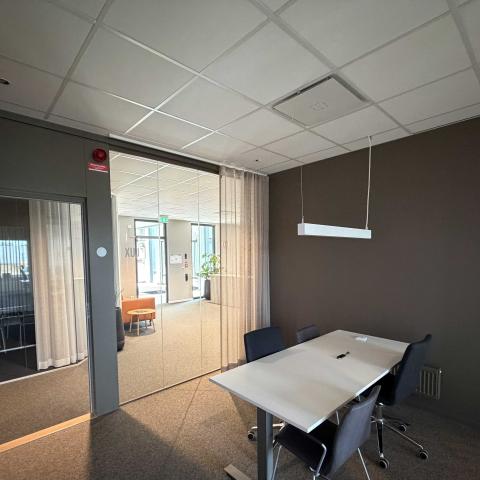
Why choose Lindinvent’s lighting control?
The lighting uses the same occupancy data, network loop and supervisory system as the indoor climate control. This reduces the number of separate systems and makes the room functions easier to coordinate and modify.
The right lighting for how the room is used
Good lighting adapts to the activity in the room and to the person using it. The automation handles most of it, but the user must always be able to make adjustments.
- The right lighting for different activities – DALI groups and scenes are adapted to the room’s function.
- Automation that users can adjust – occupancy and daylight provide automatic control, while users can adjust the lighting locally.
Light where it is needed
Den mest energieffektiva belysningen är den som ger rätt ljus när det behövs och dimras eller släcks när behovet försvinner.
- Ljus bara när rummet används – belysningen styrs av närvaro och släcks eller dimras när rummet är tomt.
- Less electric lighting when daylight is sufficient – daylight control dims the lighting.
Easy to install and modify
When lighting shares sensors and infrastructure with the indoor climate system, fewer components need to be installed. When the premises change, the control system adapts with them.
- Fewer components and installation points – the lighting uses the indoor climate system’s occupancy sensors and network loop where placement and coverage allow.
- Flexible placement and easy refurbishment – wireless, battery-free push buttons require neither wiring nor battery replacement.
- Följer verksamheten över tid – grupper, scener och ljusnivåer konfigureras om när lokalerna används på nya sätt.
Occupancy and daylight
The occupancy sensor in the supply air device detects when the room is in use, while light sensors measure how much daylight enters. Together, they determine how much electric lighting the room requires.
When someone enters
Occupancy can be used to activate the lighting or make it available according to the control principle selected for the room.
The lighting response can be adapted to the room’s function and the needs of the operation.
When the room is vacated
With Lindinvent’s DALI solution, lighting can become part of the same system that controls the indoor climate.
When occupancy is no longer detected, the lighting can be switched off after a set time or controlled to a predefined level.
This ensures that the lighting is not used longer than the room’s actual use requires.
When daylight is sufficient
When sunlight already illuminates a room, the electric lighting does not need to operate at full output.
With daylight compensation, the light level in the room is measured and the artificial lighting is adjusted according to the amount of daylight available.
When plenty of daylight enters through the windows, the lighting can be dimmed. When daylight decreases, the electric lighting can increase to maintain the desired light level.
This creates an even and comfortable lighting environment while reducing unnecessary electricity use.
Different rooms, different needs
A private office, a meeting room and a corridor are used differently. The lighting therefore needs to be controlled differently as well.
By using lighting and occupancy zones, the control can be adapted to the function of the premises and the needs of the operation.
Lindinvent’s solutions can use occupancy data from the room climate control system, while DALI-connected occupancy sensors can be used where such detection is not available.
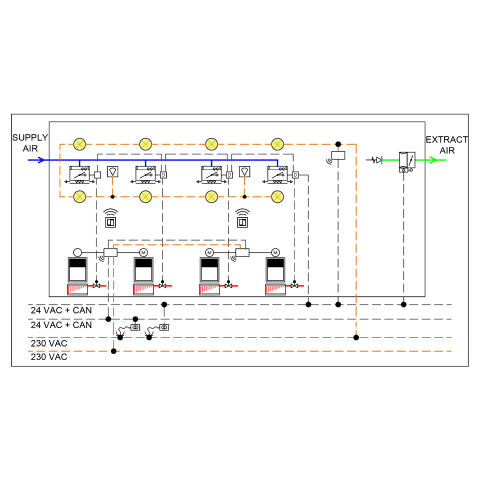
One system for the entire room
One room. Multiple functions. One shared need. Lighting is part of the same system as indoor climate control and solar shading, using shared sensors and the same communication loop.
- The same occupancy data controls ventilation and lighting.
- Solar shading and daylight control work together, allowing more daylight into the room without glare.
- One interface for the entire room in LINDINSPECT®.
Overview in LINDINSPECT®
Lighting is displayed in the same web interface as indoor climate and solar shading, covering the entire building down to room level.
- View the lighting status for each room on the floor plan.
- Monitor operating hours and functionality centrally.
- Control and adjust the lighting without entering the room.

From design to operation
1. Function
How will the rooms be used and what lighting is required?
2. Zoning
Groups and zones based on room, facade and daylight.
3. Sensors and control
Shared sensors where possible, supplementary sensors where needed.
4. Commissioning
The system is configured, calibrated and commissioned.
Technical details – DALI, configuration and products
For those who want to learn more about the technology behind the lighting control system.
What is DALI?
DALI is a standard for digital lighting control that enables communication with connected lighting components.
Unlike a solution where lighting is simply switched on and off, DALI enables more advanced and flexible control.
Depending on how the system is designed, luminaires can be controlled individually or in groups, light levels can be adjusted, and different functions and scenes can be programmed.
Configure with INCONTROL
With INCONTROL, controllers, lighting groups and functions can be connected in a graphical tool. This makes it possible to configure how luminaires, groups, light levels and different control functions work together.
This allows the solution to be adapted to the room’s function and modified when the use of the premises changes.
Flexibility over time
Premises change. An office may be refurbished, operations may relocate, and rooms may take on new functions.
Digital, addressable lighting control makes it easier to adapt the control system as the building’s needs change.
DALI therefore becomes more than a way to switch lighting on and off. It becomes part of a flexible and intelligent building.
Products for lighting control
Lindinvent’s lighting solutions comprise controllers, sensors, switches and other components that are combined and adapted to the needs of the room and building.
The products required depend on the functions and level of lighting control specified for the project.
- DALI control
- Occupancy detection
- Light measurement and daylight compensation
- Wired and wireless switches
- Lighting zone control
- Integration with Lindinvent’s indoor climate system
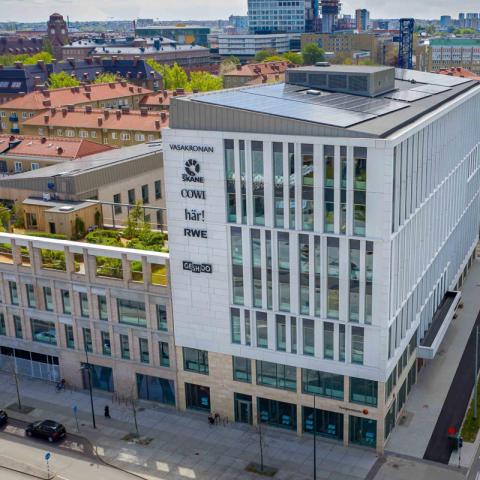
CASE
Demand-controlled lighting at Abbedissan 2
At Abbedissan 2 in Malmö, lighting control is part of the building’s demand-control system.
The DALI lighting is controlled by Lindinvent’s system and can be adapted according to both occupancy and daylight. Users can also adjust the lighting locally.
The combination of demand control and daylight compensation allows the electric lighting to adapt to how the premises are actually used and the amount of natural light available.
Are you planning lighting control for a project?
We support you from system design and planning through control, commissioning and follow-up. Contact us early in the project so we can review the building’s and operation’s requirements together.